


Plants vs. Zombies™
3.8116.76K Reviews
App Specs
- Version
- 3.16.0
- Updated On
- License
- Free
- Downloads
- 500,000,000+
- Developer
- ELECTRONIC ARTS
- Categories
- Strategy
- Platform
- Android, iOS
Screenshots
 Analysis by AppCompare
When I think about a game that can work in a shared household without turning every spare moment into a serious commitment, Plants vs. Zombies™ comes to mind. Its garden-defense battles are easy to understand at a glance, but the choice of which plants to bring and where to place them gives each level a little puzzle of its own. I’d happily hand it to someone who wants a playful strategy game, while keeping in mind that a shared device can make progress and purchases a conversation worth having.
A game that fits short turns
The basic rhythm suits everyday gaps: a level can give you a focused task, and the cartoon tone keeps the pressure light. I can picture one person playing while dinner is in the oven, then passing the device to a sibling or partner once the round is over. That works best when everyone agrees whose turn it is and understands that a level may need attention until its wave of zombies is handled. It is not a party game built around simultaneous teamwork; the shared experience is more naturally taking turns, comparing plant choices, and seeing whether someone else would defend the same lane differently.
For a household, that distinction matters. I would treat the game as a single-player activity enjoyed together rather than assume that separate players automatically have separate progress. Before someone else starts, decide whether the device is being used for one ongoing game or whether each person should play on their own device. That small bit of coordination avoids the familiar shared-tablet problem of one person advancing past a point another wanted to try.
Guides and Analysis on Plants vs. Zombies™
Choosing a setup that suits the player
The game is free to download, and its in-app purchases are listed at $0.99 to $7.99 per item. On a shared phone or tablet, I would set expectations before handing it to a child: free access does not mean every optional purchase is part of the basic experience. If more than one person uses the device, agree that nobody buys anything without asking. I would also check the device’s own purchase settings rather than assume the game itself provides household spending controls.
There is a practical account boundary here too. If family members use the same device, they should know whose app-store account is active and whether a purchase would be charged through it. I would not pass around account credentials just to make sharing easier. The simplest arrangement is to keep the device owner responsible for downloads and purchases, while letting other players take turns only if everyone is comfortable with the same game progress being used.
Taking turns without spoiling the puzzle
Because the appeal is partly in learning how different plants answer different zombie threats, a little coordination can make shared play more fun. One player can choose the lineup while another suggests where to place it, but I would swap those roles from level to level so one person does not become the permanent strategist. If someone wants to solve a stage independently, give them the device for the whole attempt instead of calling out every move. The game is more satisfying when you can see the result of your own decisions.
It also works well as a low-key screen-time choice when a household wants something more deliberate than endlessly scrolling short videos. A parent can sit nearby and ask why a plant was chosen, turning the defense into a simple conversation about planning and adapting. That does not require treating every level like a lesson: the humor and quick visual feedback are enough to keep it relaxed.
Worth Reading Before You Choose

Baby Panda World Brings Quick Play to Modern Phones, but Its Game Library Feels Busy

QuizzLand Review: A Good Fit for Short Trivia Breaks, Not Every Player

Basketball Stars: Multiplayer Is Fast, but Can It Recover When Matches Go Wrong?

WEBTOON Turns Phone Updates Into a Better Reading Routine

How Alibaba.com Dominates the B2B Marketplace

Metro's Quiet Rise: Redefining Mobile Communication
Age, tone, and expectations
The game is rated Everyone 10+, so I would use that as a starting point when deciding whether it suits a younger player, then consider the individual child and the household’s preferences. Its conflict is presented through exaggerated cartoon plants and silly zombies rather than realistic scenes, which makes the tone feel playful to me. Still, the age rating is more useful than assuming that “cartoon” automatically means suitable for every child.
EA is the developer, and the game has been around since November 13, 2014. Its current version is 3.14.0, and it requires Android 5.0 or later on Android devices. It has a 3.9 average from around 5.8 million ratings, with about 117,000 written reviews, and has passed 500 million installs. Those figures suggest a long-running, widely played title, but they do not tell me whether a particular child will enjoy its pace or whether it fits a particular household’s rules. I would let the player try the style before deciding it is a reliable go-to.
The Basics of Battling Zombies
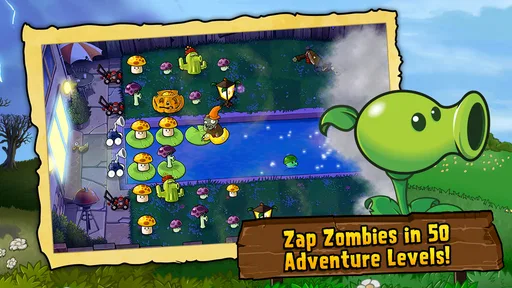
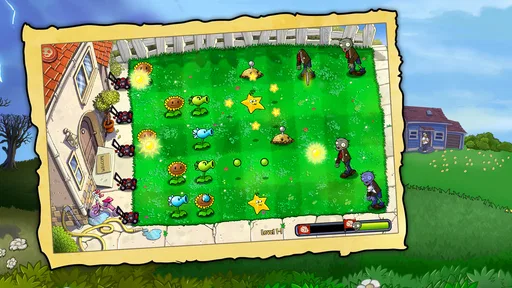
At its core, Plants vs. Zombies™ is a tower defense game. Your mission, should you choose to accept it, is to defend your garden from waves of goofy zombies. And how do you do it? By planting various types of plants, of course! Each plant has its unique ability, from shooting peas to slowing down zombies with freezing attacks. Trust me, once you start strategizing which plants to use against those brain-hungry zombies, you’ll be hooked.
Gameplay and Features
The gameplay is simple yet engaging. You start with a small selection of plants, and as you progress through the levels, you unlock more. The zombies also get tougher and more diverse. Some might even surprise you with their unusual skills, like pole vaulting over your defenses. It definitely keeps you on your toes!
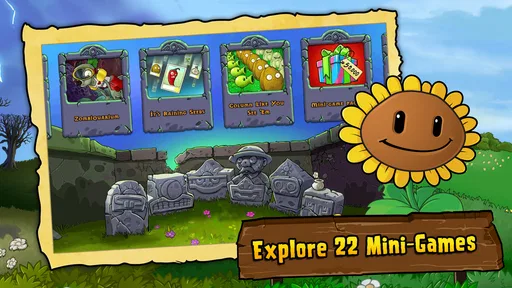
One of the features I love is the variety of levels and environments. From a sunny backyard to a spooky night setting, each level offers a fresh challenge. And let’s not forget about the mini-games and puzzles, which provide a nice break from the main action.
Reading the field, not just picking favorites
For me, the strongest strategic habit is to look at what the zombies are doing before settling on a familiar lineup. A plant that feels dependable in one situation may not cover the problem that is actually approaching, and a pole-vaulting zombie is a good reminder that a neat-looking row is not always a complete defense. I try to ask two questions before a stage: what is likely to get through first, and which lane would be hardest to recover if I ignore it? That quick scan makes choices feel intentional rather than automatic.
There is also a useful trade-off between building a comfortable setup and reacting to surprises. Loading a selection with familiar attackers can feel reassuring, but it may leave too little room to answer a specific threat. When a level goes wrong, I find it more useful to identify the weak point than to repeat the same layout and hope for a different result. Change one part of the plan at a time where possible; that makes it easier to see whether the adjustment actually helped.
That makes the game a good fit for someone who enjoys small tactical decisions and learning through retries. It is less suitable for a player who wants a story-heavy adventure, direct combat controls, or a game where progress comes from reflexes alone. Compared with many strategy games built around managing a large map, long-term resources, or competing against other players, this one keeps the problem close and readable: defend a set of lanes with a limited choice of plants. I prefer that focused scale when I want a quick puzzle, but players seeking deep multiplayer planning may find it too contained.
Different moods, different kinds of challenge
The environments do more than change the backdrop. Moving from a sunny backyard to a spooky night setting gives the experience a fresh feel, and the shift helps keep a long run from seeming visually identical. I would avoid assuming that a favorite approach will transfer perfectly from one setting to another. Treat each new stage as a reason to look again at the field and the available choices, rather than as a repeat of the last level with different scenery.
The mini-games and puzzles are valuable when I want a change of pace without leaving the same playful world. They offer variety beside the main defense pattern, though they will not replace a separate puzzle game for someone looking for a broad collection of unrelated challenges. I like them as a palate cleanser: if I have been repeating a difficult approach, switching activities for a while can keep the session enjoyable instead of making progress feel like a chore.
A practical tip is to stop after a frustrating attempt and return later rather than turning a casual game into a long argument with one stage. This is especially helpful on a shared device: the next player can start fresh instead of inheriting a rushed plan or being told exactly how to finish it. If the household likes friendly comparisons, talk about which plant choice worked after the round, not while someone is trying to make a decision.
Visuals and Soundtrack
The graphics are colorful and cartoonish, which fits perfectly with the game’s light-hearted tone. The characters, both plants and zombies, are designed with a lot of humor and personality. You’ll find yourself chuckling at some of the zombie antics.
And the soundtrack? Catchy as heck! Each track complements the gameplay, making the experience even more immersive. Whether you’re blasting through levels or strategizing your next move, the music adds an extra layer of enjoyment.
Where the charm has limits
The same focused structure that makes a round easy to understand can become repetitive if you want a new kind of activity every few minutes. The game asks you to defend lanes repeatedly, and while plants, zombies, environments, puzzles, and mini-games bring variation, the central task remains recognizable. If you prefer open-ended exploration, fast action, or frequent social interaction with other players, I would look elsewhere rather than expect this to become a different genre.
Sound and visual style are part of the appeal, but they may not suit every situation. In a quiet waiting room or beside someone trying to sleep, I would lower the device’s sound or play without it; the music is enjoyable, not essential to understanding the basic strategy. And although the controls are intuitive, a small screen can make it less comfortable for a group to watch and discuss placements. A tablet is easier for shared viewing, while a phone is more convenient when one person is playing on the move.
Why You’ll Love It
If you're looking for a game that's easy to pick up but hard to put down, Plants vs. Zombies™ is it. It’s a combination of strategy, humor, and just pure fun. The game doesn’t take itself too seriously, and that’s part of its charm.
Another thing to highlight is its accessibility. Whether you’re playing on Android or iOS, the controls are intuitive, and the game runs smoothly. Plus, it’s perfect for on-the-go gaming. Got a few minutes to spare? Jump into a quick level and fend off some zombies!
Who I’d recommend it to
I would recommend it to casual players who want strategy without a steep learning curve, and to households that enjoy taking turns over a shared screen. It is also a nice option for someone who wants a recognizable, self-contained challenge instead of a sprawling game demanding a long session. The key is to enjoy the decisions themselves: selecting plants, watching the lanes, and adjusting when a zombie slips past the plan.
I would skip it if your priority is competitive multiplayer, a realistic action game, or a deep campaign where every choice reshapes a large world. It is also not my first pick for a household that cannot agree on shared progress or purchase boundaries. Those are not defects in the strategy itself, but they can turn a convenient shared game into a source of friction. A different title designed around separate profiles or cooperative play would be a better fit for those needs.
Final Thoughts
So, why should you download Plants vs. Zombies™? Because it’s a delightful mix of strategy and entertainment wrapped up in a package that’s easy to enjoy. Whether you’re a casual player or someone who loves a bit of tactical challenge, this game offers hours of fun. Give it a shot, and let your garden be the last line of defense against the zombie apocalypse!
My household verdict is that it works best when everyone treats it as one person’s turn at a time and keeps purchases and account responsibility clear. At no cost to download, it is easy to consider as a casual strategy game, while optional in-app purchases mean I would still set sensible expectations on a device used by others. The 3.9 average across millions of ratings gives a broad sign of how widely it has been tried, but the more useful test is simple: do you enjoy planning a defense one lane at a time? If yes, it remains an inviting pick for short sessions; if not, its charming presentation may not overcome the repeated tower-defense rhythm.
Pros
- Engaging gameplay with strategic elements.
- Charming graphics and humorous animations.
- Variety of plants and zombies keeps it fresh.
- Easy to learn for all age groups.
- Frequent updates add new content.
Cons
- In-app purchases can be pricey.
- Energy system limits playtime.
- Some levels may feel repetitive.
- Ads can interrupt gameplay.
- Requires internet for certain features.
FAQs for Plants vs. Zombies™
What is the objective of Plants vs. Zombies™?
Plants vs. Zombies™ is a tower defense game where the main objective is to protect your home from waves of invading zombies by strategically placing various types of plants in your garden. Each plant has unique abilities to attack or block the zombies, and players must manage resources to deploy them effectively.
Are there any in-app purchases in Plants vs. Zombies™?
Yes, Plants vs. Zombies™ offers in-app purchases that can enhance gameplay. Players can buy coins, which are used to acquire new plants, power-ups, or other game advantages. While the game is enjoyable without purchases, these options can help progress faster or unlock additional content.
Is Plants vs. Zombies™ suitable for children?
Plants vs. Zombies™ is generally suitable for children, with its cartoonish graphics and lighthearted approach to the zombie theme. It encourages strategic thinking and resource management. However, parents should be aware of in-app purchase options and may want to supervise gameplay or adjust settings accordingly.
Can Plants vs. Zombies™ be played offline?
Yes, Plants vs. Zombies™ can be played offline, which makes it a great game for travel or when an internet connection is unavailable. However, certain features, like in-app purchases or accessing online leaderboards, require an internet connection.
What platforms is Plants vs. Zombies™ available on?
Plants vs. Zombies™ is available on multiple platforms, including Android and iOS devices. It can also be played on PC and various gaming consoles. This wide availability means players can enjoy the game on their preferred device, making it accessible to a broad audience.


